Optics bench
Lens alignment, readable text targets, and mixed reality clarity checks.
Innovation Lab
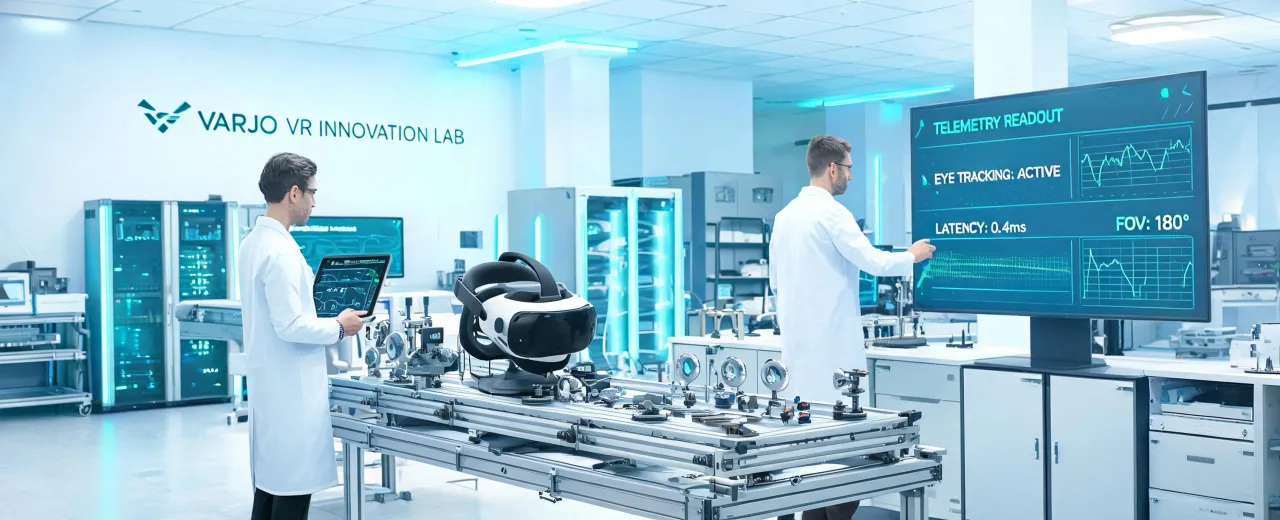
Varjo treats the lab as a bridge between optical engineering and venue economics. A prototype is not considered launch-ready until teams can explain clarity, comfort, reset time, support risk, and business assumptions in the same room.
The Innovation Lab is organized around the questions commercial buyers ask after the first impressive demo. Can guests read fine detail for ten minutes? Can staff reset a headset quickly without damaging optics? Does the tracking layout survive real foot traffic? Can the attraction show a credible revenue range without pretending every venue has the same economics?
Varjo documents those answers through display reviews, GPU frame-budget tests, headset fit sessions, content checks, and operator console trials. The result is a launch brief that looks more like an engineering decision record than a sales sheet.
Lens alignment, readable text targets, and mixed reality clarity checks.
GPU, content, and refresh assumptions reviewed before the launch date.
Queue, fitting, cleaning, and emergency stop scripts tested as one routine.
Session length, ticket price, staffing, and downtime risks modeled transparently.
Varjo compares average session length, reset time, staff ratio, and optional accessory revenue to help operators decide whether a premium room should prioritize fewer high-ticket sessions or broader timed access.
The lab does not promise universal comfort. Instead, it records fit guidance, motion intensity, break language, and stop protocol so operators can run a more responsible and more predictable headset experience.
Tracking volume, lighting, and pass-through expectations are evaluated early because mixed reality failures are usually room-design problems before they are hardware problems.
Send your attraction concept, expected guest flow, and content status. Varjo will map the next technical questions before hardware selection begins.
Request Lab Review